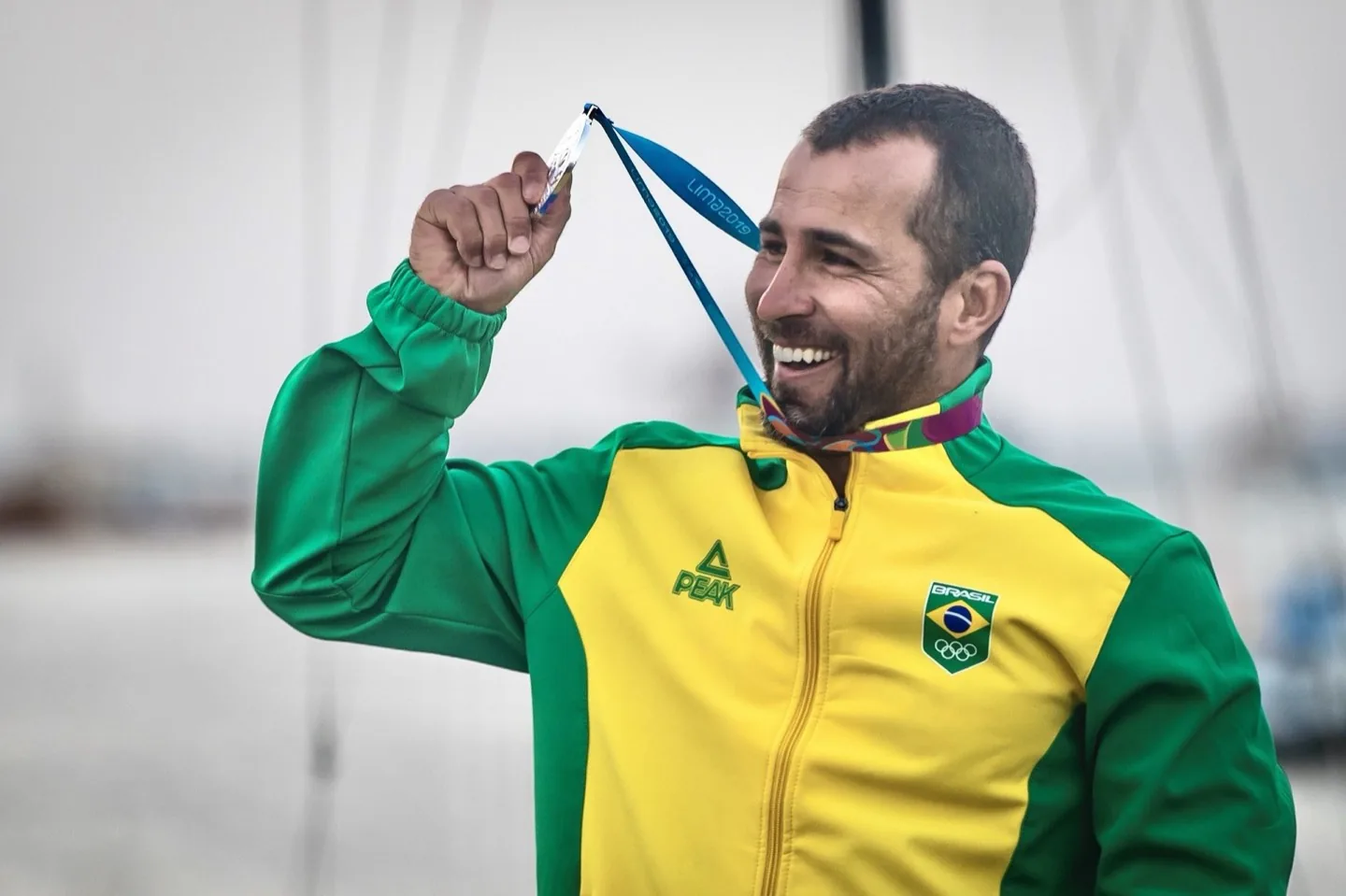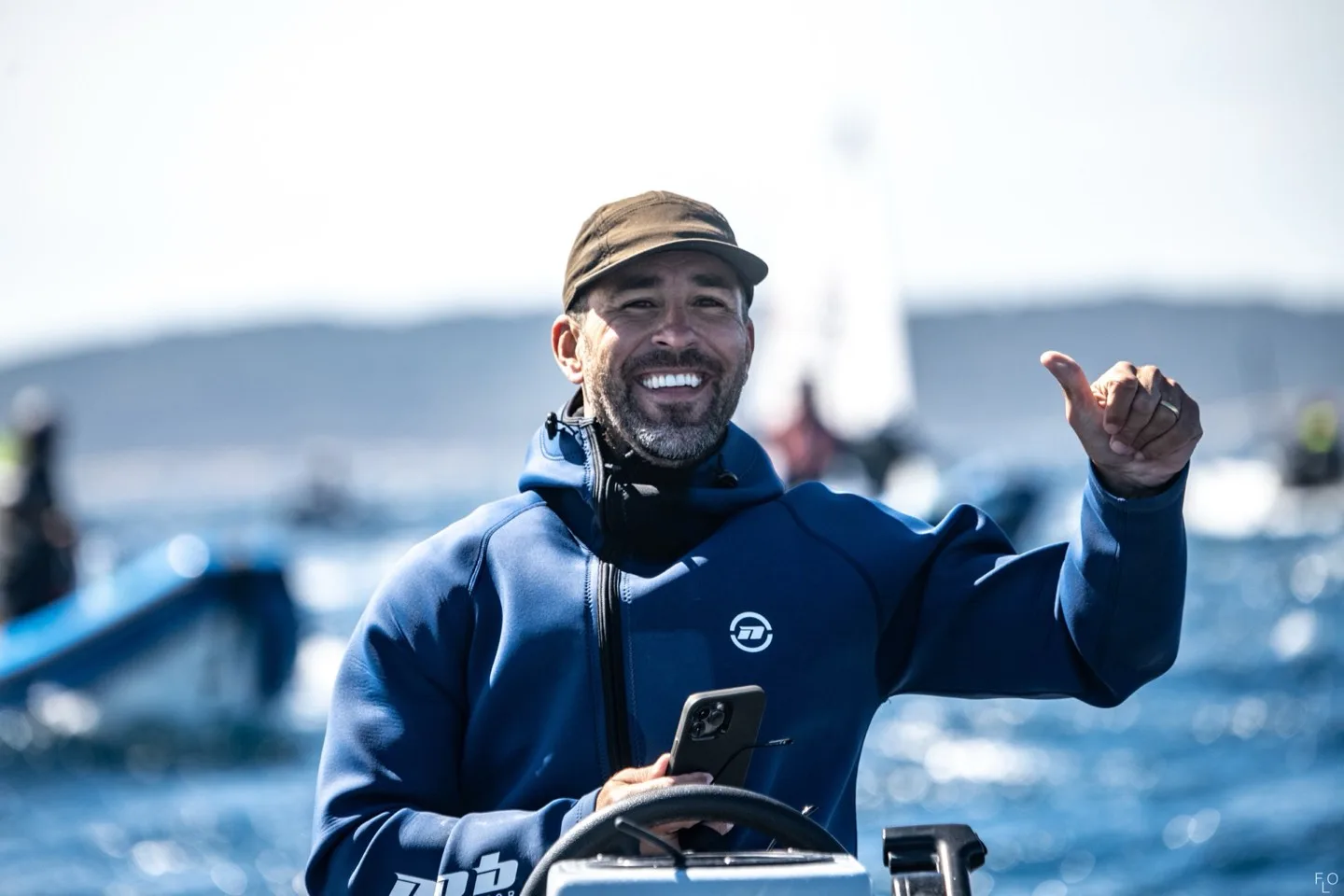
I raced the ILCA 7 at three Olympic Games (Beijing 2008, London 2012 and Paris 2024) and went to a fourth as a coach, with Trinidad & Tobago in Rio 2016. I also coached China's team during the Tokyo 2020 cycle, and in 2025 I won the ILCA 7 Masters World Championship. Across five Olympic cycles, one thing kept repeating itself: in breeze, the sailor who can still hike flat and think clearly in the last race usually beats the sailor who was faster in the first one.
This is the ILCA fitness plan I use as the base for Team Fontes athletes, from youth ILCA 4 sailors to masters. It is built around what a Laser actually asks of your body, and it follows one rule: build general capacity first, then specialize as your important events get close.
Key points
- Four pillars: endurance, hiking and core, strength, mobility. Every session mixes at least two of them.
- Measure before you train: the hiking bench test tells you your level, from under 30 seconds to 200 seconds or more.
- Eight weeks in five phases (learn, build, intensify, reduce, test), with intensity controlled by RPE.
- For endurance, my order of preference is bike, then rowing, then running.
- Specialize for the boat, the venue and the calendar in the final 4 to 6 weeks before your main event.
Why does fitness decide ILCA races?
The ILCA is a small boat with a big physical bill. These are the numbers I open my hiking ebook with:
Then you do it again the next day, and the day after. Fatigue in a Laser rarely shows up as feeling tired. It shows up as a hiking position that creeps up a few centimeters, a sheet eased too early in a gust, a tack delayed because your legs want a break, a layline misjudged because your head is foggy. None of that is labelled "fitness" on the results sheet. All of it is trainable.
What does an ILCA sailor actually need to train?
Everything I do with Olympic campaigners and club sailors fits into four pillars, held together by recovery. Remove one and the system leaks.
1. Endurance: bike first, rowing second, running third
Endurance is what lets you sail race four with the same power as race one. I build it with two types of session:
- Zone 2 aerobic: 40 minutes at RPE 3, breathing through your nose. If you can't breathe through your nose, slow down. If you can say a three word sentence, you are in the right place.
- Intervals: 10 minutes easy, then 4 × (2 minutes hard at RPE 8 + 3 minutes easy at RPE 3), then 5 minutes easy. This is the session that builds VO2max and the ability to recover between gusts.
My order of preference for the machine is bike, then rowing ergometer, then running. The bike loads the quads with a bent knee, close to the hiking position, with almost no impact, so you can add volume without punishing your knees. The rower brings in the back, the grip and the posterior chain. Running works when it is all you have, but it carries the highest impact cost and the least transfer to the boat, so it comes last.
2. Hiking and core
This is what separates amateur from pro. I train core and hiking together because on the boat they never work apart. The core base is a Tabata superset: Snow Angel and Plank, 20 seconds on and 10 seconds off, 8 rounds, 3 to 4 times a week. The Snow Angel trains the pull, the plank trains the hold, and together they reproduce the core demand of an upwind leg. Hiking itself is trained on a hiking bench with three protocols, which I explain further down.
3. Strength
Strength for sailing means applying force in the positions the boat puts you in. My standard block is an EMOM (every minute on the minute): squat, row, lunge, V-up, wall sit march, 20 seconds of work and 40 seconds of rest per movement, 4 rounds, 20 minutes in total. The clock controls the rest, so you build strength without burning out the aerobic system. Exhale on the effort, keep the trunk tight, and never trade range of motion for speed.
4. Mobility, plus recovery
Tight hips mean a compensated hiking position, and a compensated position means power leaks and, eventually, injury. Mobility takes 10 to 15 minutes a day, focused on hips and shoulders: hip 90/90, hip flexor stretch, thoracic rotation, pigeon stretch, shoulder circles. After every session, add 10 to 15 minutes of recovery work for the lower back, glutes, adductors and tibialis. Training is the stress. Recovery is where the adaptation happens.
One rule I never break: no single stimulus sessions. Core plus endurance plus mobility, or strength plus core plus mobility, always at least two pillars in the same day. A session of only stretching or only crunches is too light to change anything for a competitive sailor. The only exception is a deliberate recovery or taper day.
How fit are you right now? Start with the hiking bench test
Without a benchmark there is no real progress, so the plan starts with a test. Warm up, get a timer, and sit on the bench in your real race position: feet firm under the strap, legs extended, torso forward. Time how long you hold perfect form. The clock stops when the position breaks, not when you give up.
| Level | Time held in perfect form |
|---|---|
| 1 · Beginner | Less than 30 s |
| 2 · Intermediate | 30 to 59 s |
| 3 · Experienced | 60 to 89 s |
| 4 · Advanced | 90 to 150 s |
| 5 · Pre-elite | 150 to 200 s |
| 6 · Elite | 200 s or more |
Watch for the three mistakes I see most on the bench: crossed legs (bad for the knees and kills force transfer), a disengaged core (you fade in seconds) and a loose strap (every wave steals your power). Fix the position before you chase the time, because training a bad position only makes it stronger. Repeat the test in week 8.
What does the 8-week ILCA fitness plan look like?
I control intensity with RPE (rate of perceived exertion, 1 to 10) instead of percentages or heart rate zones, because sailors train in gyms, garages and hotel rooms with whatever equipment is there. RPE 3 means you could keep going for hours. RPE 8 means you can only get a few words out. The plan runs 4 to 5 sessions a week, 40 to 60 minutes each, on top of your sailing.
| Weeks | Phase | Target RPE | What changes |
|---|---|---|---|
| 1 and 2 | Learn | 4 to 5 | Bench test in week 1. Correct movement, posture and breathing. Learn to read RPE honestly. |
| 3 and 4 | Build | 5 to 6 | Same exercises, more sets. Longer zone 2 rides. Hiking at your current level, more rounds. |
| 5 and 6 | Intensify | 6 to 7 | Shorter rest, harder intervals, move up one hiking level if form holds. |
| 7 | Reduce | 4 to 5 | Volume down by about half, technique and intensity kept. This is where you absorb the work. |
| 8 | Test | 7 to 8 | Repeat the bench test, plus wall sit, deep squat hold and a 20 minute bike or run test. |
What does a typical training week look like?
This is the week structure from my ebook, adapted to the plan. Notice that every day mixes stimuli.
| Day | Session | Content |
|---|---|---|
| Monday | Hiking + aerobic intervals | 10 min mobility · Tabata Snow Angel × Plank (8 × 20 s / 10 s) · 10 × (30 s dynamic hiking + 90 s bike at RPE 3 to 5) · 5 min recovery |
| Tuesday | Zone 2 + mobility | 40 min bike (or rowing, or running) at RPE 3, nasal breathing · 10 to 15 min mobility |
| Wednesday | Strength + core | 10 min mobility · EMOM 4 rounds: squat, row, lunge, V-up, wall sit march (20 s work / 40 s rest) · 5 min recovery |
| Thursday | Power aerobic | 10 min easy bike · 4 × (2 min at RPE 8 + 3 min at RPE 3) · 5 min easy · 5 min recovery |
| Friday | Isometric hiking + core | 10 min mobility · weighted plank Tabata (8 × 20 s / 10 s) · 7 × (30 s isometric hiking + 2:30 bike at RPE 3 to 5) · 5 min recovery |
| Weekend | Sailing or rest | Time on the water counts. If you don't sail, one longer zone 2 session and a full rest day. |
Only four days available? Keep Monday, Wednesday and Friday, and move the zone 2 ride to the weekend.

Hiking Like a Champion
The full version of this method: the bench test, the RPE scale, the 4-week plan, Monday to Friday routines with exact sets and times, and a video for every exercise. 25 pages, US$35, one payment.
How do you train hiking off the water?
Hiking is trained directly, on a hiking bench (or a simple setup at home). I use three blocks, each training a different side of hiking. Pick one block per session and master a level before moving up.
- Upwind hiking: endurance in movement. Continuous hiking with dynamic trunk movement, like a real upwind leg. Beginner 5 minutes, intermediate 8 to 10 minutes, advanced more than 10 minutes. If you stopped before the target, that is your level today. Next session, add 30 seconds.
- Race interval: isometric quality. Hold a perfect position, rest, repeat, 10 to 15 rounds. Level 1 is 30 s on and 30 s off, level 2 is 45/45, level 3 is 60/60. If form breaks, stop. This is a quality workout, not a survival workout.
- Short and intense: maximum effort. 20 s on and 10 s off for 10 rounds at RPE 9 to 10, first with no weight, then holding 3 to 5 kg, then 10 kg. If form breaks, reduce the load, never the effort.
On light wind or no wind days, do the same blocks in the boat itself. Turning windless time into hiking time is one of the cheapest gains in the sport.
How does the plan change before a major regatta?
The plan above is general capacity, and it works for any boat where you hike. As the important events get closer, I make the training more specific to the boat, the venue and the racing calendar. In the final 4 to 6 weeks before a main event:
- Hiking gets race specific. Race intervals are matched to the length of an upwind leg at that venue, and more of the hiking volume moves into the boat.
- Strength is maintained, not built. Fewer sets, same quality, so the legs arrive fresh.
- Hard lactate sessions disappear in the last weeks. You keep short, sharp efforts and drop anything that leaves you sore for two days.
- The last week is a taper: low volume, one short quality stimulus per day, lots of sleep. Nobody gets fitter in the final ten days, but plenty of sailors arrive tired.
If you want to work on this on the water with me, I run ILCA clinics with SailBetter. The dates and venues are on the ILCA camps page.
Is it different for ILCA 4, ILCA 6, ILCA 7 and masters sailors?
The pillars are the same. The dose changes.
- ILCA 4 and youth sailors: position quality and bodyweight technique first. The loaded version of the short and intense block comes only when the position is solid.
- ILCA 6 and ILCA 7: the bigger rigs ask for longer, harder holds in breeze. This is where the advanced hiking levels and the 60/60 race intervals earn their place.
- Masters: as a masters sailor myself, I treat strength as permanent, not seasonal. Big muscle groups need 48 to 72 hours between hard sessions, so fewer max days and more consistency. A plan you follow for 52 weeks beats a brutal block that ends in injury.
- Other hiking classes: Finn, 470 and OK Dinghy sailors use the same method. The demand of holding your body outside the boat is the same, often bigger.
What are the most common Laser sailing fitness mistakes?
- Training without a benchmark, so nobody knows if anything worked.
- Holding a bad hiking position on the bench for the sake of the clock.
- Running as the only cardio, with sore knees and little transfer to the boat.
- Sessions with a single stimulus that feel productive and change nothing.
- Trying to get fit in race week.
- Skipping the 10 minutes of recovery after the session.
A note before you start: this is a general plan, not a medical prescription. If you have an injury, a heart condition, or you are coming back after a long break, check with a doctor or physiotherapist first, and stop any exercise that causes sharp pain.
Want this plan built for you?
The ebook gives you the structure. Coaching gives you a coach making sure it turns into results. In the Fitness plan (US$100 per month) we start with a goal call, I build your program in TrainingPeaks around your gym, your class and your race calendar, adjust it every week, and you have me on WhatsApp. The Sailing plan (US$200 per month) adds technical and tactical coaching.
Frequently asked questions
How many days a week should an ILCA sailor train fitness?
Four to five sessions a week off the water, 40 to 60 minutes each, on top of your sailing. Every session mixes at least two pillars (endurance, hiking and core, strength, mobility). With only four days, keep the hiking, strength and isometric hiking days and move the zone 2 ride to the weekend.
Is cycling or running better for Laser sailors?
Cycling. My order of preference is bike, then rowing ergometer, then running. The bike loads the quads with a bent knee, close to the hiking position, with almost no impact. Running works when it is the only option, but it has the highest impact cost and the least transfer to the boat.
How long should a Laser sailor be able to hold a hiking position?
On the Team Fontes level scale, less than 30 seconds of perfect form on the hiking bench is beginner, 60 to 89 seconds is experienced, 90 to 150 seconds is advanced, and 200 seconds or more is elite. The clock stops when the position breaks, not when you give up.
Do I need a hiking bench to follow this ILCA fitness plan?
A hiking bench is the best tool, but a simple setup at home with a sturdy surface and a strap works. The rest of the plan needs a bike or rower and basic gym equipment. On light wind days you can do the hiking blocks in the boat itself.
When should I switch to event-specific training?
In the final 4 to 6 weeks before your main event. Hiking becomes race specific, strength is maintained with fewer sets, hard lactate sessions disappear, and the last week is a taper with low volume and one short quality stimulus per day.
Does this plan work for the ILCA 4, ILCA 6 and other hiking classes?
Yes. The pillars are the same for ILCA 4, ILCA 6 and ILCA 7, and for Finn, 470 and OK Dinghy sailors. What changes is the dose: youth sailors build position quality before adding load, and masters sailors need more recovery between hard sessions.